

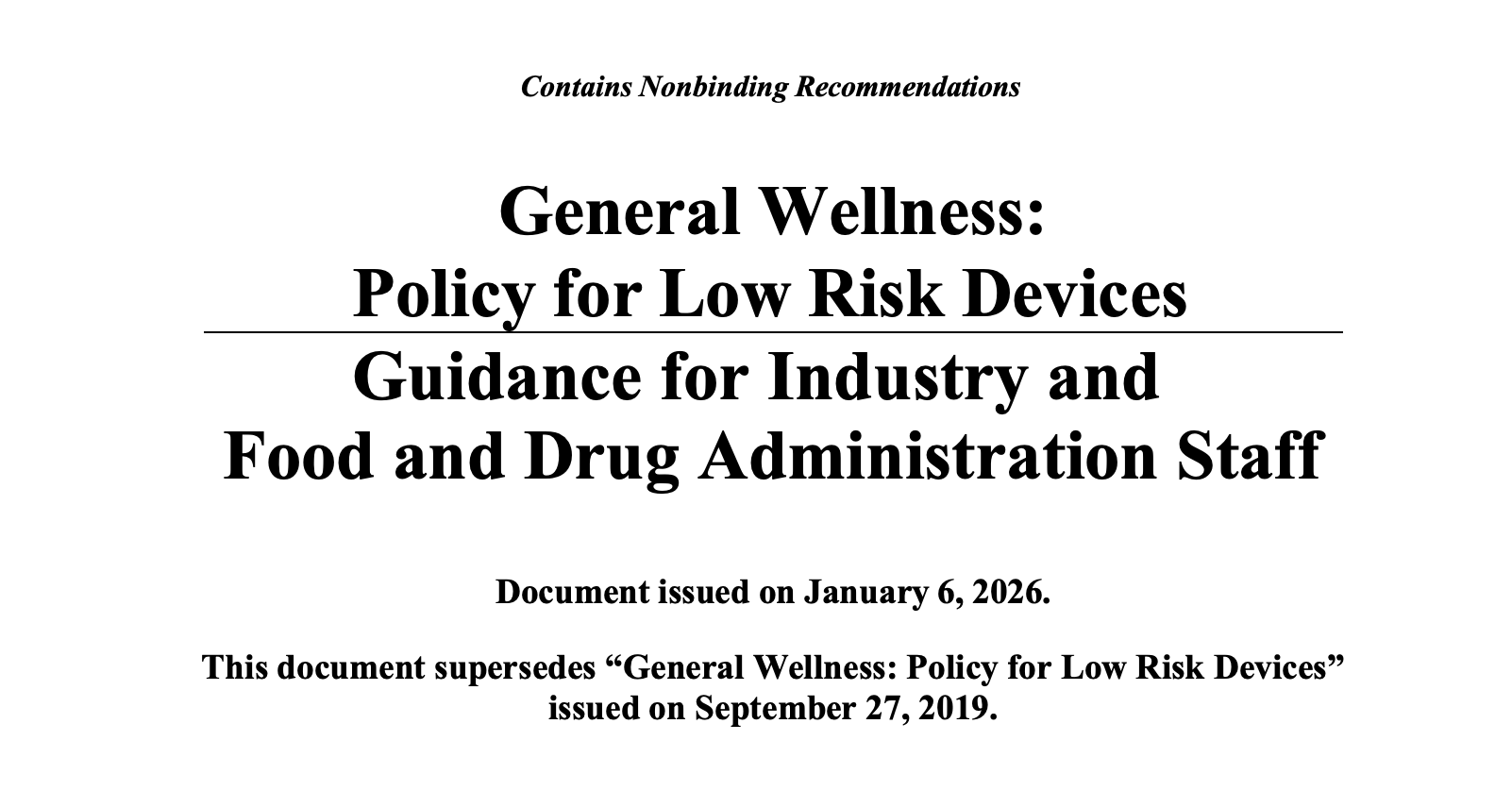
We wanted to understand the updated FDA Guidance about Wellness and Low-Risk Devices, so we built a redlining tool.
The core framework stays the same: wellness products must (1) be intended only for general wellness use and (2) present low risk. But what counts as "wellness" just got a lot more interesting.
Physiologic parameters are now explicitly on the table: blood pressure, SpO2, glucose estimates, heart rate variability. The 2026 guidance says non-invasive sensors outputting these values can qualify as general wellness. The 2019 version was silent on this. FDA is catching up to what wearables actually do today!
But the guidance adds a full page of guardrails (see our redlining doc): no clinical thresholds unless validated, no alerts that "prompt or guide specific clinical action," no claims of medical-grade accuracy or substitution for FDA-authorized devices. Labeling, UI, and marketing must all stay strictly wellness-focused.
Our take: This guidance opens doors for wearable developers, but it also gives FDA more surface area to enforce. The 2019 version was vague enough to argue either way. The 2026 version is clearer, which means fewer gray zones to hide in. That's a good thing.