

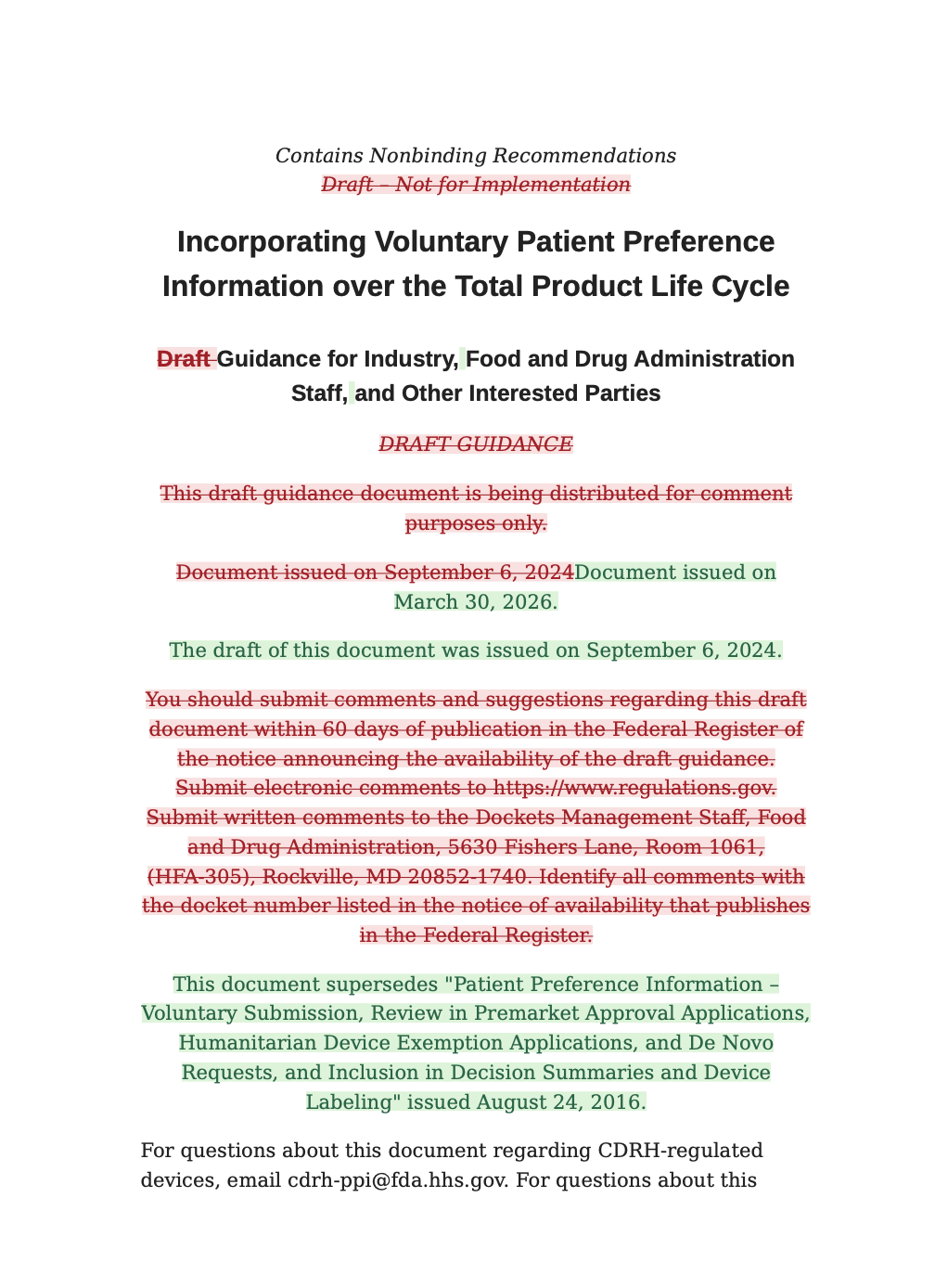
FDA finalized its guidance on incorporating voluntary Patient Preference Information (PPI) over the total product life cycle (March 30, 2026). The draft had been out since September 2024, so we ran our redlining tool to see what actually changed.
Bottom line: no surprises, but a cleaner, more confident document. FDA is making it easier to understand what a good PPI study looks like and where it fits in the product life cycle.
Scope expanded
The final version now explicitly includes Breakthrough Device designation requests in the list of where PPI can be used. If you are pursuing Breakthrough, patient preference data just became a more clearly recognized tool in your submission strategy.
New study quality sections added
"Relevance to Patients" and "Study Conduct" are now standalone sections in the recommendations (Section V). The draft buried study conduct near the end. The final promotes it to position 3, signaling FDA wants to see rigor upfront.
Examples are no longer hypothetical
The draft called them "Hypothetical Examples." The final drops that qualifier. FDA is presenting these as real, representative cases, including a new example on caregiver and parent preferences for a pediatric ear tube PMA. That is a signal they are increasingly comfortable pointing to actual PPI use in regulatory decisions.
Study design guidance is more prescriptive
The final version breaks out the research question, preference parameters, and planned statistical analysis as separate items sponsors should address. The draft lumped them together. If you are designing a PPI study, the checklist is now clearer.
Title broadened
"Other Interested Parties" was added to the audience. Patient groups and academics conducting PPI studies are now explicitly in scope.